Boundary Critique
Before calling something a win, who and what did we leave out of the calculation?
A decision can look right when it leaves its real costs and affected people outside the calculation.
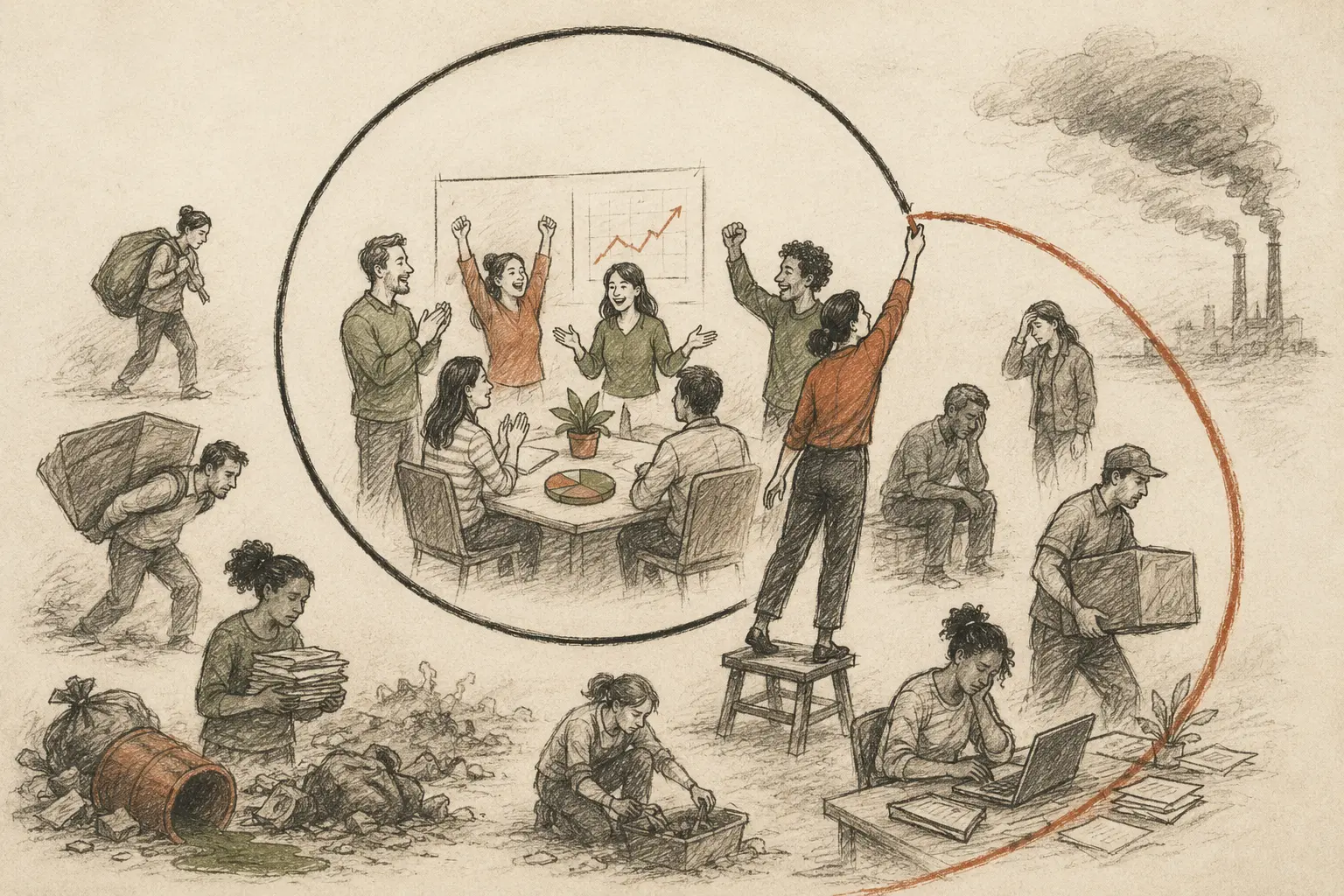
The calculation can be right and still miss the decision
You can cut support costs by making help harder to reach, improve delivery time by exhausting the team, or make a product cheaper by passing the cost to someone who never appears in the spreadsheet.
Each argument can look convincing because it leaves important costs outside the calculation.
Boundary Critique asks what the calculation counts, who matters in it, and who is left carrying the consequences.
A faster signup that moves the cost
Removing an identity check may help more people finish signup. If that is the only number the team watches, the change looks like an obvious win.
Now include the fraud losses, legal reviews, support requests and payment failures caused by removing the check. The answer may reverse because the team is finally counting more of what the change affected.
Ask who gets the benefit, who pays the cost and whose outcome is missing from the calculation.
Where the missing cost goes
Engineering. One software team can make its part look faster by leaving failed requests and cleanup work for another team. Its graph improves, but the customer still waits and a different team now gets woken at night to repair the failures.
Economics and the environment. The price looks cheap because it doesn't include pollution, public infrastructure or future cleanup.
Families and relationships. A choice can be described as “best for everyone” while one person's unpaid labour, exhaustion, or lost ambition remains uncounted. Leaving that work out of the calculation can make one person's time and ambition count less than everyone else's.
History and politics. Stories of progress often depend on whose experience entered the archive and whose loss was treated as incidental, so the account of progress changes when those experiences and losses are included.
A stopping rule
Include an effect when the decision materially caused it and counting it could change the conclusion.