Requisite Variety
Keep the differences that change what you should do, and group the cases where one response really works.
When different situations need different actions, the system needs enough ways to respond without treating every case as special.
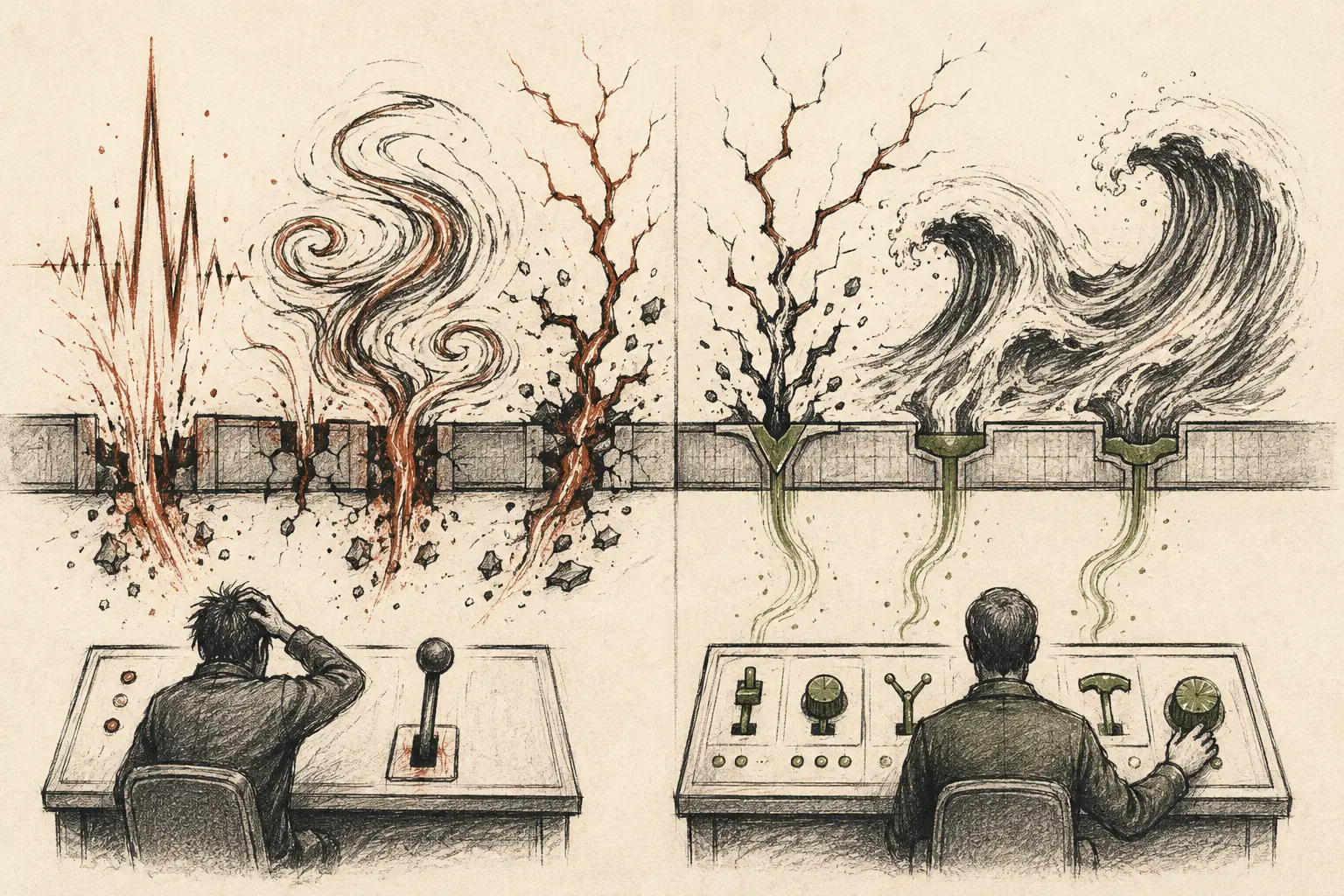
Different situations can need different responses
A system can fail when it gives the same answer to situations that need different actions. The work may look tidy because everything sits in one category, while the people handling the exceptions carry the real complexity.
Requisite Variety means that when two situations need different responses to keep the outcome under control, the system has to be able to tell them apart and respond differently.
A payment router
Imagine sending every payment to the provider with the highest overall success rate. It sounds sensible till one provider performs better for a particular country and currency, while another handles timeouts more reliably.
A timeout may justify retrying elsewhere while a permanent decline shouldn't, so one global rule loses the distinction that changes the right action.
Keep only the fields that change routing or retry behaviour, so the system preserves useful differences without creating endless categories.
Where this shows up
Medicine and biology. An immune system needs enough ways to recognise changing threats. In treatment, kidney function or an allergy can change the right dose or drug, so one standard protocol can be safe for one patient and wrong for another. Standardisation helps till it erases a difference that matters clinically.
Management. A leader who answers uncertainty, poor execution, disagreement and missing context with “move faster” has too few responses. Speed may help when execution is slow. It can deepen a disagreement or make missing context worse, so the response has to match the cause.
Keep the differences that change the response
Ask: which differences would actually change the right response?
Each extra category and response adds coordination, testing and maintenance work. Add a distinction only when it changes what the system should do.