Path Dependence
When two things look the same now, check whether their history still changes what they can do next.
Two things that look the same today can still behave differently because their earlier choices left different baggage behind.
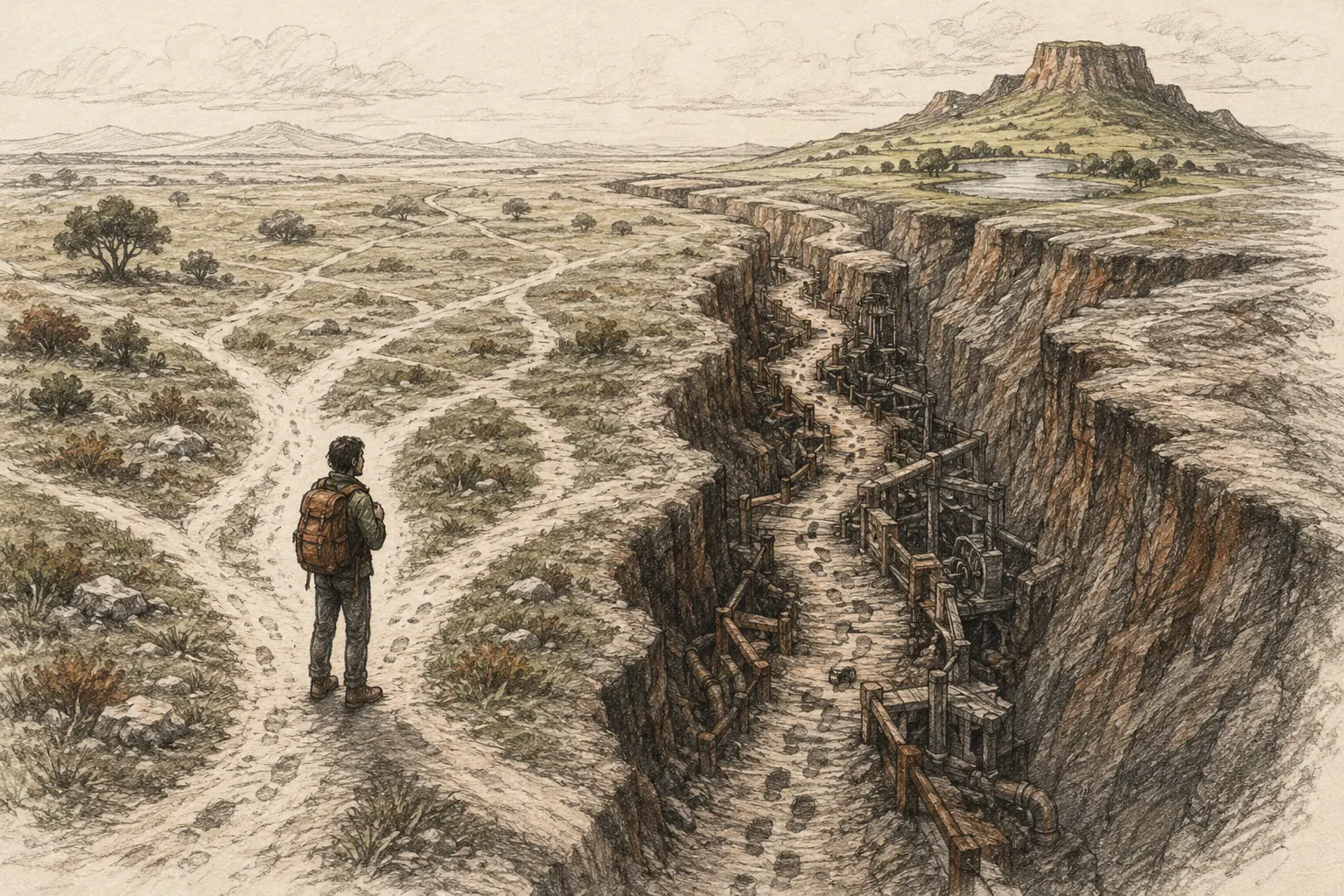
The current state can hide the reason things differ
Two systems can look identical today and still behave differently because earlier choices left different costs, habits or stored settings behind.
Path Dependence means the route that got you here still affects what happens next. A snapshot of today is incomplete when old decisions still change what is cheap, possible or expected.
What this looks like in software
Two customers have the same app version and the same balance. One signed up through an older process and still has old settings and access rules attached to the account. The other joined yesterday.
A report that groups them together by current balance misses something important. The app can still treat them differently because those older settings and access rules remain active for the first customer.
Where it shows up
Technology and economics. A standard can survive because millions of people, tools and institutions already work around it. Switching may be expensive even when a better design exists.
Organisations. A temporary approval step can outlive the crisis because everyone has rebuilt their work around it.
Trust and relationships. A late reply from somebody who is usually reliable means something different from a late reply after months of broken promises.
Product and data. Customers can carry old prices, the effects of earlier sign-up processes, expectations, data formats and access rules. Grouping them only by what is visible today can hide the history that still changes what they do.
History matters when it is still doing work
The past does not decide everything forever. It matters when it still changes cost, behaviour or the choices available today.