The Map Is Not the Territory
Use the model to get your bearings, then look at the real situation before you decide.
A map, dashboard or plan can be useful and still leave out the detail that changes what you should do.
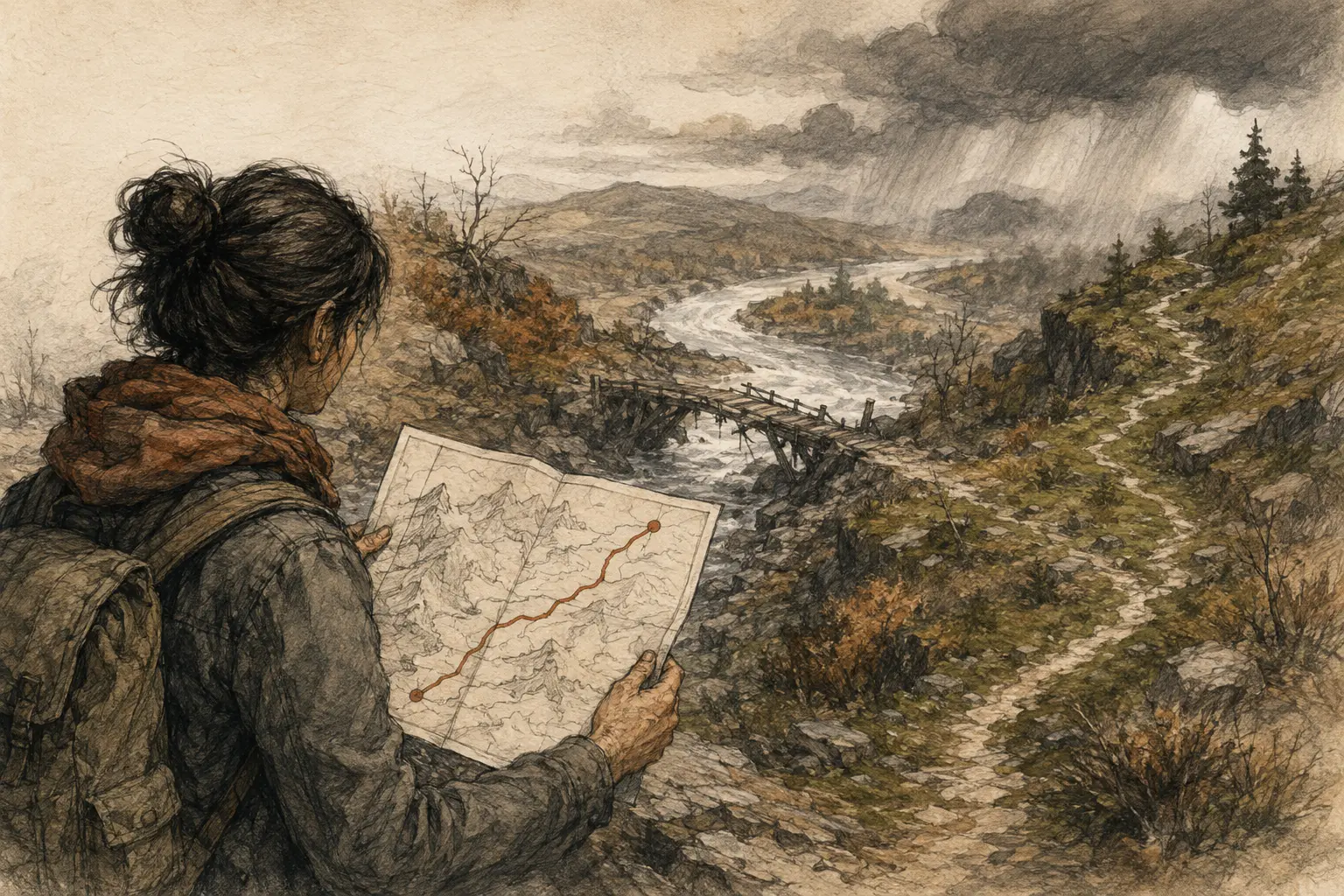
A map can be right and still send you the wrong way
Maps, dashboards, diagrams and plans help because they leave things out. A map with every tree, pothole and closed road would be hard to read. The problem starts when we forget what it left out.
The Map Is Not the Territory is a reminder that the picture is never the thing itself. A model can be accurate enough to help and still miss the one detail that changes the decision.
The dashboard was right
A product dashboard says conversion fell from 40% to 32%. That is useful, but it does not tell the team what changed for a customer.
They could spend weeks redesigning onboarding. Looking at the actual flow shows a smaller problem: the team added a new country, but the form asks people there for a postcode they do not normally use. One field explains most of the drop.
The dashboard was right. It just could not show which market and which field were causing the problem.
The same problem in other places
Software. A diagram shows who owns each part of the system. Following one real request shows where it waited, what other part slowed it down and where it failed.
Medicine. A normal test result is good evidence. It can still miss symptoms, timing or context the test was never built to detect.
Strategy. A market category may put together people who buy the same product for very different reasons. The category helps you estimate the market, while hiding why the groups may respond differently.
Relationships. We often make up a tidy explanation for somebody's behaviour. Ask them before treating that story as evidence.
When to leave the map and look around
Go back to the real case when the cost of being wrong is high, the evidence conflicts, people behave differently from the model, or the model was made for another job.
Use the model to get your bearings. Use the real situation to make the decision.