Common Knowledge
Does everyone know that the others received the same decision?
People can move together when everyone knows the decision and can see that the others know it too.
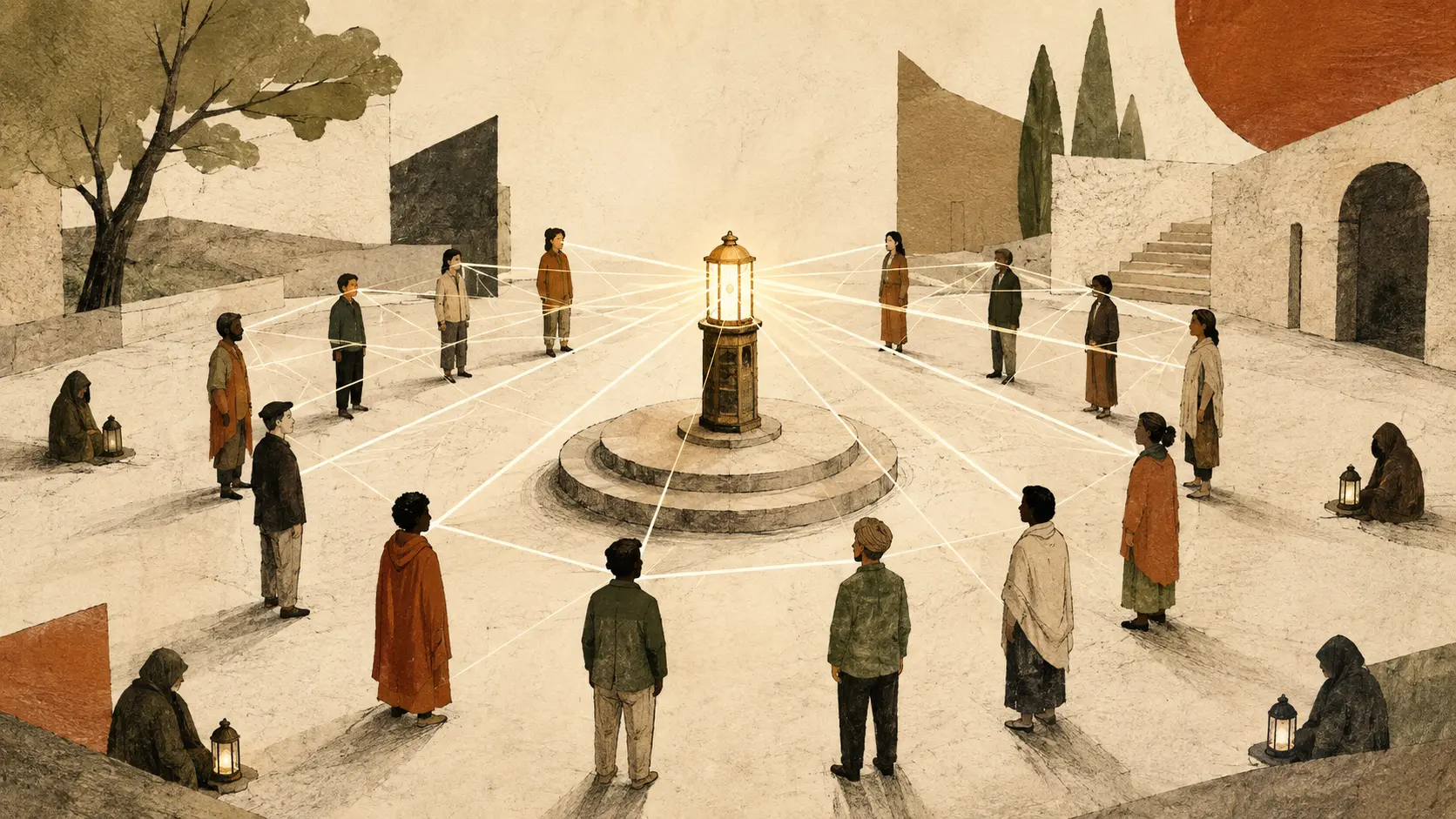
Everyone knew privately, so nobody could move together
A product launch is becoming unsafe. Engineers raise the same concerns in separate conversations with their manager. The manager privately reassures each person: the deadline can move if necessary.
The public plan, however, still says Friday.
Each engineer now knows that delay is allowed. What nobody knows is whether everyone else received the same permission, whether leadership accepts it, or whether the launch owner still expects Friday. One person keeps testing late because she assumes the others remain committed. Another stays quiet because he doesn't want to be the lone blocker. The team keeps working late toward a Friday launch that almost nobody supports.
A visible announcement changes the situation: “We are pausing the launch until these three conditions are met.” The owners acknowledge it in the shared channel, and the plan is updated where everyone can see it.
The technical facts didn't change. What changed was what people could safely expect everyone else to do.
Knowing something is different from knowing it's shared
Common Knowledge is stronger than everyone receiving the same message. Strictly, it means everyone knows, everyone knows that everyone knows, everyone knows that everyone knows that everyone knows, and so on without a final step.
That is the infinite ladder. Everyday groups cannot prove it forever, but a public decision and visible acknowledgement can create enough practical certainty for people to coordinate: each person can see that the others received the same message and are expected to act on it.
This is stronger than everyone privately receiving the same message. Separate messages can create shared knowledge without giving anyone confidence that the knowledge is actually shared.
The distinction matters whenever an action is sensible only if other people are likely to act too:
- One person evacuating through the agreed exit depends on others not rushing the opposite way.
- One team pausing a launch depends on other teams not continuing to ship around it.
- One participant voicing dissent becomes safer when everyone can see that dissent is permitted.
- One buyer refusing a panic price works only if enough buyers expect others to refuse it too.
The information can coordinate action once each person has reason to believe the others received it and will act on it.
Sending a message doesn't establish common knowledge
Leaders often treat sending a message as if it established a shared decision.
An email can be missed. A policy can be read differently. A message in a large channel can leave each person unsure whether the decision is final, whether the relevant owners saw it and whether silence means agreement or fear.
For the signal to coordinate people, three things need to happen:
- A public signal. The same statement is available to the people whose actions must align.
- Visible reception. Participants have reason to believe the others received and understood it.
- Actionable consequence. The statement says what changes, who acts and when the shared condition ends.
Acknowledgement matters because coordination depends on what the receiver knows, rather than the effort of the sender. Visible acknowledgement still doesn't prove that everyone interpreted the decision the same way.
For an important decision, ask a few people to explain what changes, who acts and when the rule ends. You are checking whether one public sentence produced one shared expectation or several private ones.
Where this matters outside a launch decision
Game theory and economics. In a coordination game, the best action depends partly on what other people will do. A commuter chooses a meeting point, a depositor decides whether to withdraw, and a crowd chooses an exit using expectations about other people's expectations. A public signal can matter more than another private message because it changes what each person expects the others to do.
Law and governance. Published laws, public hearings, recorded votes, and announced precedents create a shared reference that independent actors can expect one another to use. A private interpretation from one official may inform its recipient but can't coordinate citizens, courts, and agencies in the same way. Publication still doesn't guarantee comprehension, legitimacy, or compliance, and a rule can be common knowledge while people resist it.
Distributed systems. Computers also need proof that messages arrived before they make a shared decision. One computer can confirm receipt to the sender, but it cannot know whether that confirmation reached the sender. The sender could confirm receipt of the confirmation, then it would not know whether that second confirmation arrived, so the acknowledgements could continue forever. Real systems stop at practical rules: wait for enough machines to agree (a quorum), stop waiting after a set period (a timeout), and make repeated requests safe so they do not create duplicate results (an idempotent retry). These rules make coordination possible under unreliable communication; they do not create the infinite certainty of formal common knowledge.
For this kind of coordination, participants need evidence about what others know and will act on.
When a fact needs to become public
Reach for this model when:
- A decision requires several people to change behaviour together.
- Everyone appears to understand, yet nobody wants to move first.
- A policy, incident state or launch threshold must have one operative meaning.
- People agree in private but remain silent in the group.
- A commitment needs to be credible to outsiders.
- Silence may be mistaken for consent.
Ask:
- Who needs to coordinate, rather than merely be informed?
- What does each person need to know about the others’ knowledge?
- Where is the public statement everyone should use?
- How will misunderstanding or dissent become visible?
- What event changes or ends the shared rule?
There's an emotional benefit too. Private permission leaves someone wondering whether using it will make them seem disloyal. Public permission removes some of that fear, so people can stop waiting for somebody else to move first.
What public visibility can't repair
Common knowledge isn't automatically true knowledge. A group can publicly repeat a false claim, or publicly act as though everyone agrees while privately disbelieving it. Forced acknowledgements may manufacture the appearance of alignment and make honest dissent more dangerous.
It also doesn't solve every coordination problem. People may understand the same rule perfectly and still have incentives to violate it. A public launch pause won't hold if one team receives a large bonus for shipping anyway.
That's where the Principal-Agent Problem asks a different question: do the people controlling action have different information or interests from those who bear the result? Making the rule public can fix missing information. It won't help when one team is still rewarded for breaking the rule.
The Abilene Paradox describes a group choosing an outcome that no member actually wants because each person misreads everyone else’s preference. Making preferences common knowledge can dissolve that failure. The Abilene Paradox names the failure. Common Knowledge describes one condition that can prevent it.
Only the decisions that govern joint action need this visibility. Publish them, check that people interpreted them the same way and keep a safe way to disagree.