Via Negativa
Before adding another process, ask what work is already making the system harder to run.
When you can see what is causing harm and cannot yet prove a new fix will help, removing the harm can be the more reliable move.
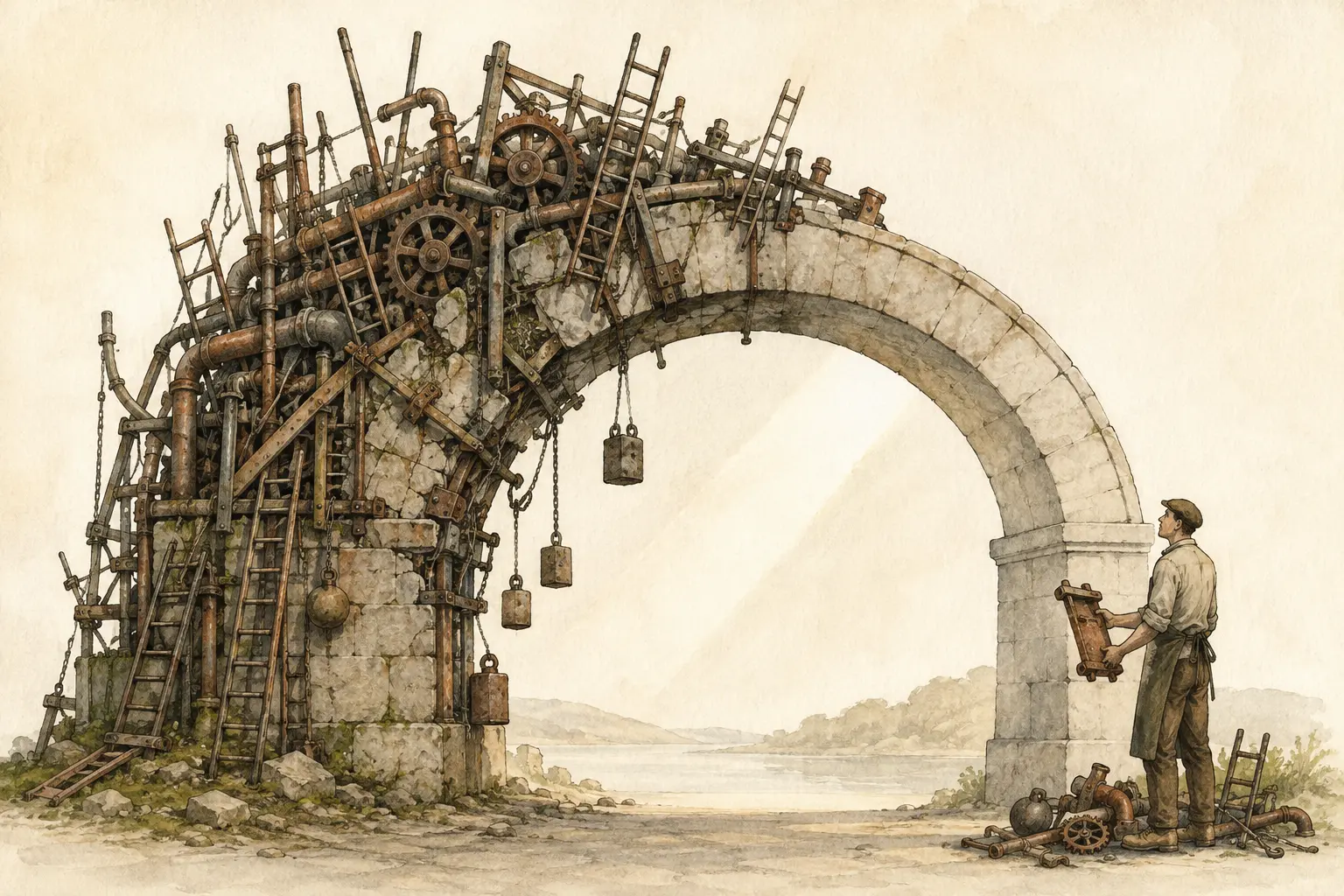
The meeting created work around the work
A product team has a weekly status meeting. To make the meeting useful, someone creates a deck. The deck needs numbers, so another person maintains a spreadsheet beside the dashboard. A short preparation call appears because the figures sometimes disagree, and low-risk changes wait for approval so nobody is surprised during the meeting.
None of these decisions looks unreasonable on its own. Together they create a second system whose job is to describe the first one. People stay late keeping both systems current, an engineer carries the hidden work of reconciling the numbers, and the actual product work slips.
The usual response is to add another fix: automate the deck, buy a planning tool, add someone to run the meeting or create a better approval form.
Via Negativa starts with removing the preparation call, using the live dashboard instead of the deck and stopping approval for changes that are cheap to reverse. Then the team can see which problem still exists.
Removal leaves fewer new effects to predict
It starts with a simpler question: what known problem can we remove before adding another solution whose effects we still have to predict?
A new solution can create its own problems, collide with what is already there and change how people work. Removing one harmful thing can still have side effects, but it usually gives you fewer moving parts to manage.
After taking something away, it is easier to see which problem remains and what the removed piece had actually been doing. Adding something may still be right, but a cost you can already see is stronger evidence than a benefit you only hope a new process will create.
How subtraction works in different fields
Medicine. A patient taking several medicines may develop fatigue or dizziness from one drug or from an interaction between them. Adding another medicine to treat the new symptom creates another uncertain interaction. When it's clinically safe, removing or reducing the offending treatment can solve the problem at its source. The useful comparison is that every extra intervention creates another possible interaction. Medicine also shows the limit clearly: stopping a necessary treatment can be more dangerous than its side effects, so removal still needs evidence and clinical supervision.
Software and security. Every outside tool, permission, connection and optional feature gives the system another way to behave and another route a failure or attacker can use. Adding another safety check may cover one route while creating more setup and maintenance work elsewhere. Removing an unused way into the system or taking away an unnecessary permission closes that route entirely, instead of adding another control somebody has to configure and maintain.
Strategy and organisational design. A company with too many priorities often tries to solve the confusion with more planning, reporting and management layers. Each layer takes some of the time and attention it is meant to organise. Removing one priority reduces the real load. Another planning layer only helps people organise the same overloaded list. With one priority gone, people can focus on the work that remains.
Remove the burden in steps
When the system feels overloaded, try these steps in order:
- Remove obvious harm. Delete the unused access, noisy alert or rule that produces no remaining benefit.
- Pause the reversible burden. Stop one meeting, report or approval step for a defined period.
- Watch what breaks and what improves. The missing element reveals the function it was really serving.
- Restore only the necessary function. If a real need remains, bring back the smallest version that handles it.
This is useful when complexity has accumulated gradually, the maintenance cost is distributed across people, or every new solution seems to create another operating burden. It also works well when you can remove something reversibly and learn before committing.
What you can accidentally remove
Absence isn't automatically wisdom. Before removing something, check the failure it prevents. Spare capacity absorbs a surge, a review may catch an irreversible mistake and a quiet relationship may still carry trust.
Visible work is easier to notice than the failure it quietly prevents. If you remove it without understanding that protection, the next incident may reveal why it existed.
Chesterton's Fence adds the missing check: understand what an element does, including the failures it prevents, before removing it. Occam's Razor is different too. It prefers the simplest explanation that fits the evidence, while Via Negativa is a way of intervening in the world through subtraction.
Remove something when you can name its current cost, its remaining benefit is small and you can restore it if the result is worse. If the removal is irreversible or the protected failure would be severe, learn with a smaller pause first.