Jevons Paradox
A cheaper use can invite enough extra use that the total still grows.
When efficiency makes something cheaper or easier to use, demand can grow enough that total use rises instead of falling.
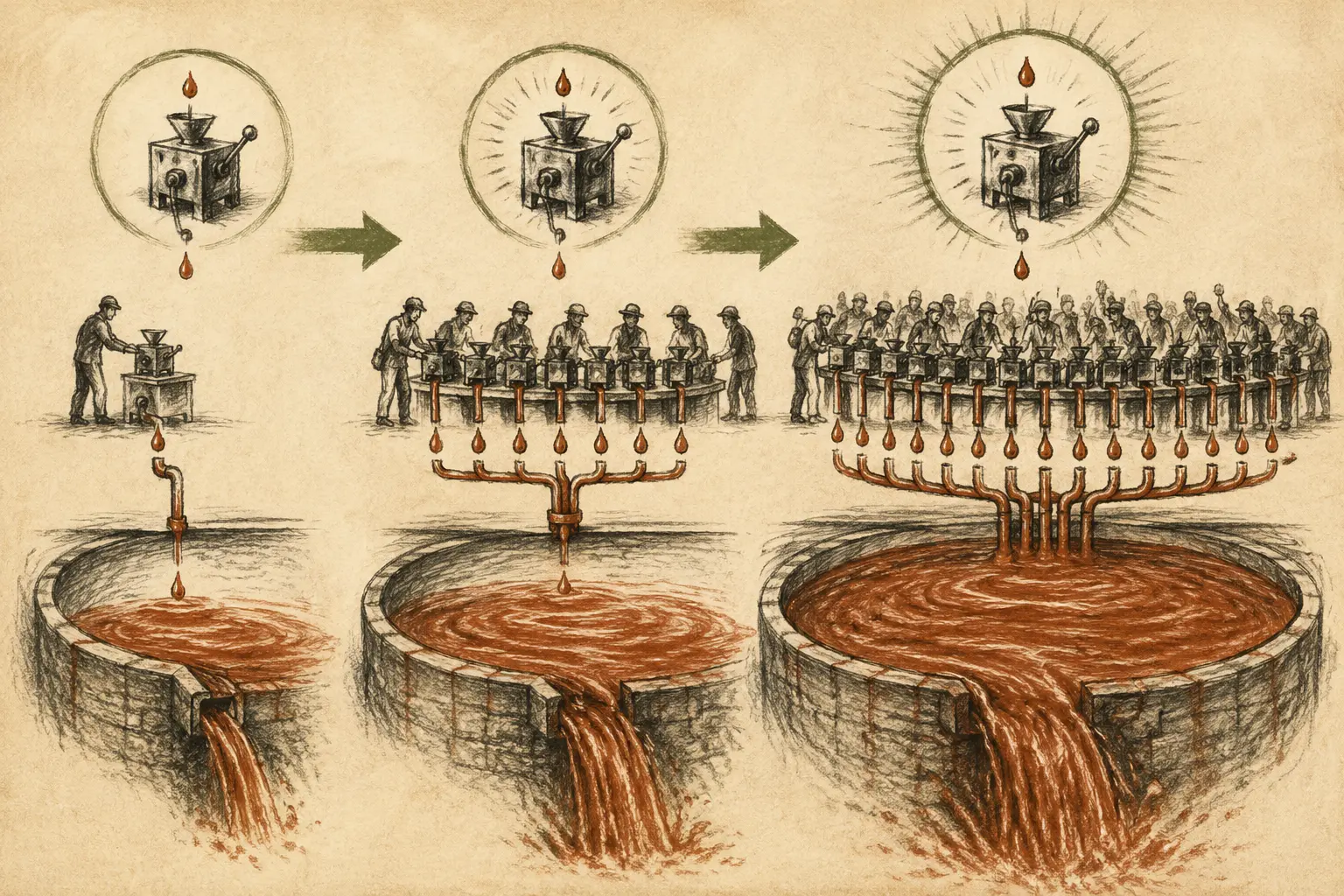
Why cheaper software work can create more engineering work
When something becomes cheaper, people usually do more of it. The extra demand can be large enough that total use rises even though each individual use costs less.
That is Jevons Paradox. An efficiency gain changes what people think is worth asking for, so lower cost per use does not guarantee lower total cost.
What happens after feature work gets cheaper
An AI tool cuts the time to build a small internal feature from five days to one. Teams then request ten times as many features.
Coding takes less time, while the extra features create more review, testing, maintenance, coordination and infrastructure work. The company may want that extra output. The mistake is assuming a cheaper feature automatically means a cheaper engineering organisation.
Where lower cost can increase total use
Energy economics. A more efficient machine uses less energy for each task. Lower operating cost can encourage enough additional use that total energy consumption rises. Whether it does depends on how strongly demand responds.
Transport. Faster or wider roads make driving more attractive and bring forward trips people used to avoid. The time saving creates new demand, and congestion returns.
Household life. A labour-saving tool can reduce the effort in one task while expectations around cleanliness, responsiveness or output expand. The tool saves time per task, while the total work can stay the same.
Product design. Removing friction can bring in more customers while adding support, fraud-review, moderation or subsidy costs. A team may solve acquisition and then discover it cannot support the larger customer base at the old cost.
The useful question
Ask: If this becomes ten times cheaper, what might people do ten times more often?
The rebound does not always overtake the saving. Demand may be capped, saturated or barely responsive. Estimate how much use will grow before calling an efficiency gain a reduction in total cost.