Braess's Paradox
Where will people converge once the shortcut is available?
A new shortcut can slow the whole network when everyone changes course and crowds the same bottleneck.
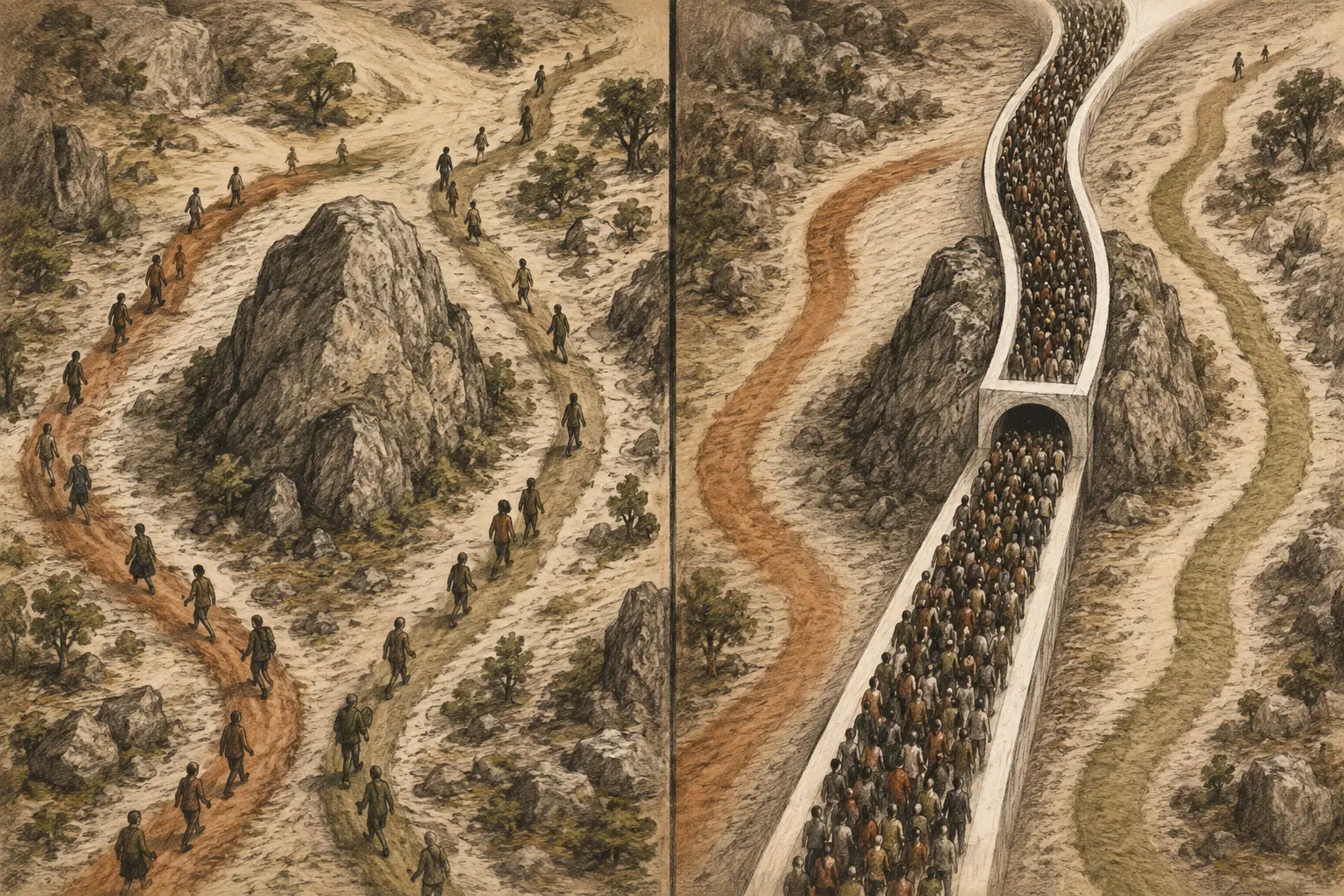
When adding a shortcut makes everyone slower
Braess's Paradox happens when a new route looks faster to each person, everyone moves toward it, and the shared bottleneck makes the whole network slower.
What changes after the route opens
Before: Requests are split across two slower routes inside the software. Neither is ideal, but the work is spread out.
The new path: The platform adds one route that is faster while few teams use it. Each team measures its own requests, sees the improvement and moves there.
After everyone moves: Every request now passes through the same database. It becomes overloaded, so each request takes longer than it did on the old routes.
The shortcut worked for one team on its own and failed after everyone chose it. Removing the path can sometimes improve the total flow because it changes the choices available to every team.
The same problem in other networks
Transport. A new road can draw drivers toward routes that share the same crowded junction. The road adds capacity locally and changes route choice globally.
Organizations. A direct executive escalation lane feels faster than the normal decision paths. Once every team uses it, the executive becomes a bottleneck and ordinary decisions slow down too.
Marketplaces. A convenient route to the same high-performing suppliers can concentrate demand until service worsens, while other capable suppliers receive too little traffic to develop.
Communication networks. A route that is faster at first can attract enough traffic to lose the advantage that made it attractive.
When this is actually Braess's Paradox
Braess's Paradox applies only when people can choose routes, their choices affect travel time, and those choices crowd a shared bottleneck. Simply adding capacity isn't enough.
Before adding a route, ask where people will converge once they can all see the shortcut. Work through what happens after everyone adjusts, then test the route with limited traffic.