The Abilene Paradox
What if everyone in the room has the same concern and nobody says it?
A group can make a choice nobody wants when everyone mistakes silence for support.
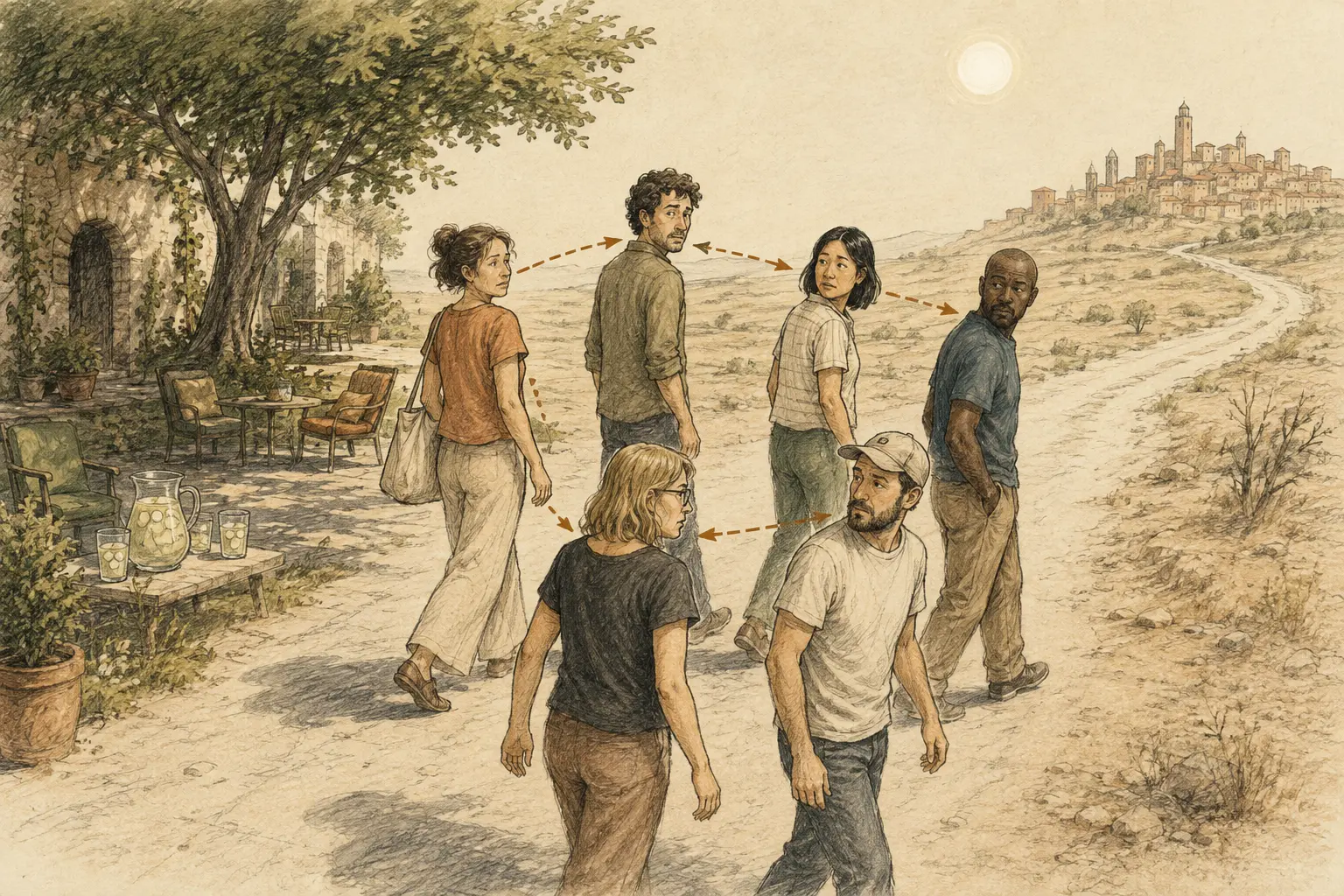
When nobody objects and everyone has doubts
A group is discussing what to do next. Nobody is excited about the proposal and nobody objects either, because each person assumes somebody else supports it.
The decision passes. Later, everyone says they had doubts from the start.
That's the Abilene Paradox: people make a group decision nobody wants because each person reads everybody else's silence as approval.
A room can count silence as support even when the people staying quiet have the same concern.
How the false agreement builds
The loop usually looks like this:
- I have a concern.
- I assume the others support the proposal.
- I keep quiet because I don't want to hold everyone up.
- My silence makes me look like I agree.
- Everyone else makes the same mistake.
By the end, the decision can look unanimous even when almost everyone privately wanted the opposite.
A simple example
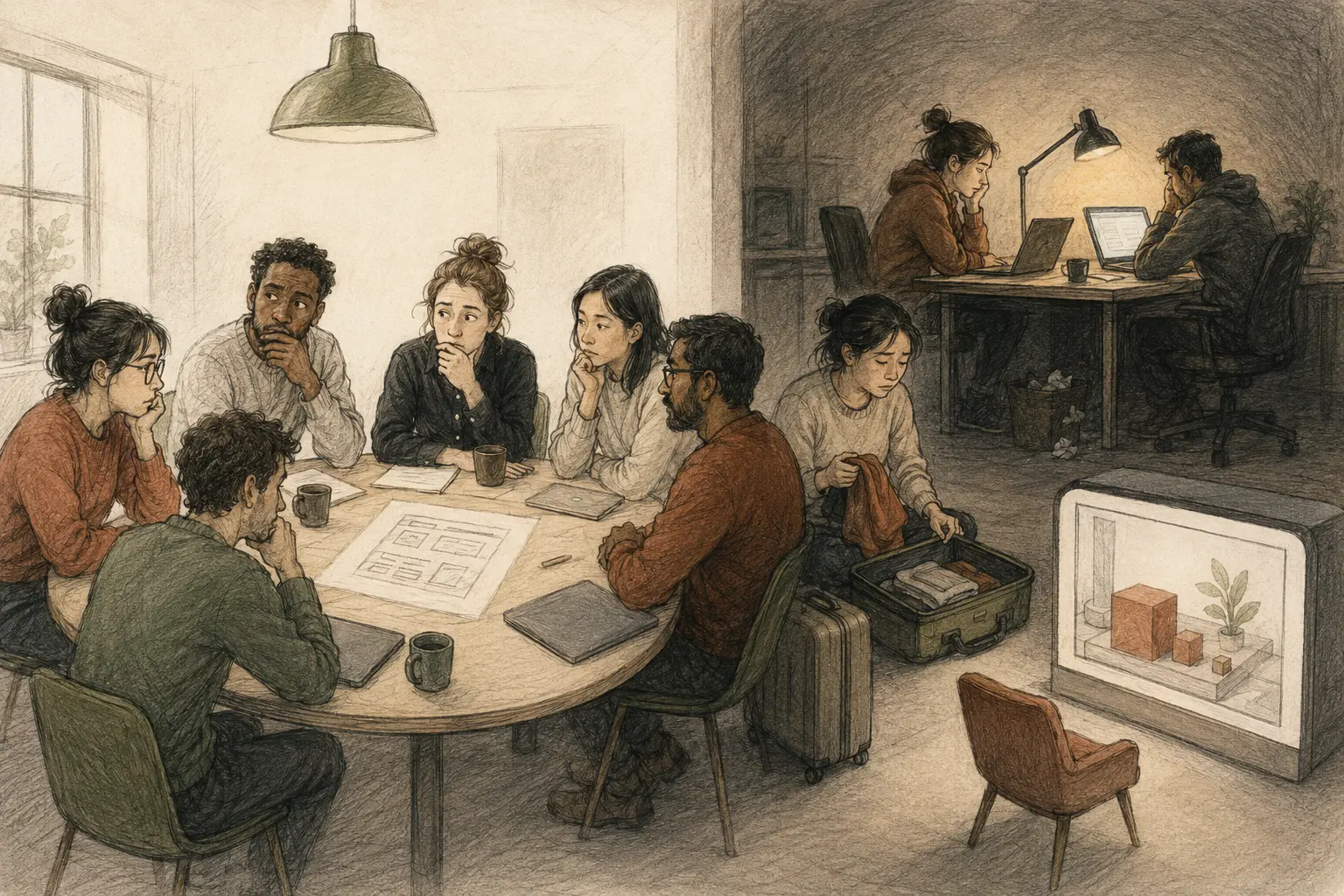
A product team is asked whether it should spend six weeks building a large feature for an approaching launch. The designer doubts customers need it. The engineers think the deadline will create fragile work. The product manager assumes leadership already expects it.
Because nobody says this plainly, the feature is approved, people work late, someone cancels leave, and the launch produces little customer interest. The team did the work well, but nobody had really chosen the work in the first place.
Where this shows up outside a meeting
Organizations and product teams. Hierarchy makes people search the room for the preference of the most powerful person. If leaders speak first, a tentative suggestion can harden into apparent consensus, and the decision is made without hearing the concerns people kept private.
Relationships and families. A family may keep an exhausting tradition because everyone thinks it matters to someone else. Saying what you prefer can feel vulnerable, so people protect one another from a disappointment nobody would actually feel. This stops being a useful analogy where fear, coercion, or dependency makes disagreement unsafe.
Politics and public institutions. People sometimes conceal an unpopular preference because they misjudge what others will tolerate. Public opinion can then appear more settled than private opinion really is, and the appearance reinforces itself. Anonymous voting and protected dissent let people share what they think without one person taking all the risk of speaking first.
Markets and information cascades. An investor may follow a crowd because other people's actions look like evidence. The Abilene Paradox is narrower because the crowd may be moving while its members privately doubt the direction. In both cases, observed behaviour is a poor substitute for asking what people believe.
Make the disagreement visible early
Use this before a costly group decision that passes with no objections.
Ask people what they would choose if the decision were theirs alone. Let the most senior person speak last. Separate “I can support this” from “this is what I think we should do.” For sensitive decisions, collect preferences privately before discussing them together.
The aim is to find out what people actually think while changing course is still cheap, without reopening every decision forever.
Where it stops helping
Not every unpopular decision is an Abilene Paradox. People can genuinely disagree, accept a necessary trade-off, obey authority, or stay silent because dissent is unsafe, and calling all of that false consensus can hide the real issue.
Use the model when people are misreading one another. If power prevents honesty, fix the power and safety problem too.